
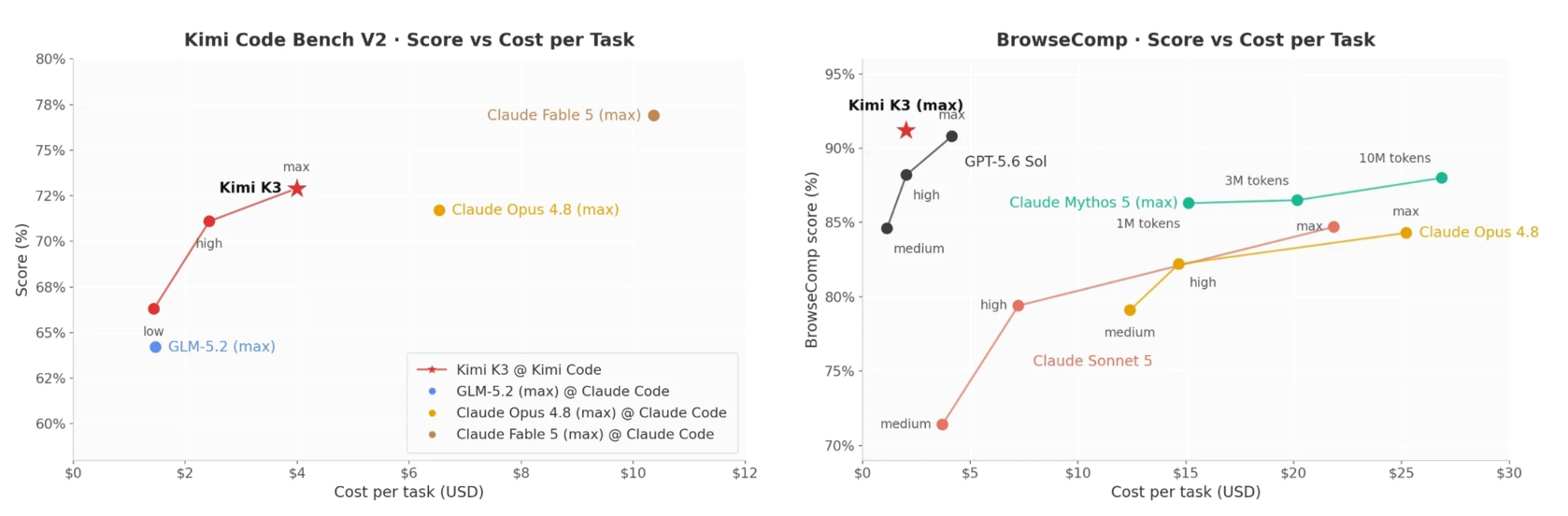
In a notable advancement for artificial intelligence, Moonshot AI has unveiled Kimi K3, a groundbreaking open-weight model featuring a staggering 2.8 trillion parameters. This release marks a pivotal moment in the AI industry, as Kimi K3 not only demonstrates superior performance but also offers significant cost efficiencies compared to traditional closed models. With a rollout cost of just $4.65, Kimi K3 dramatically undercuts the $13.41 per rollout of its primary competitor, Claude Fable 5, making it a compelling choice for businesses and developers alike.
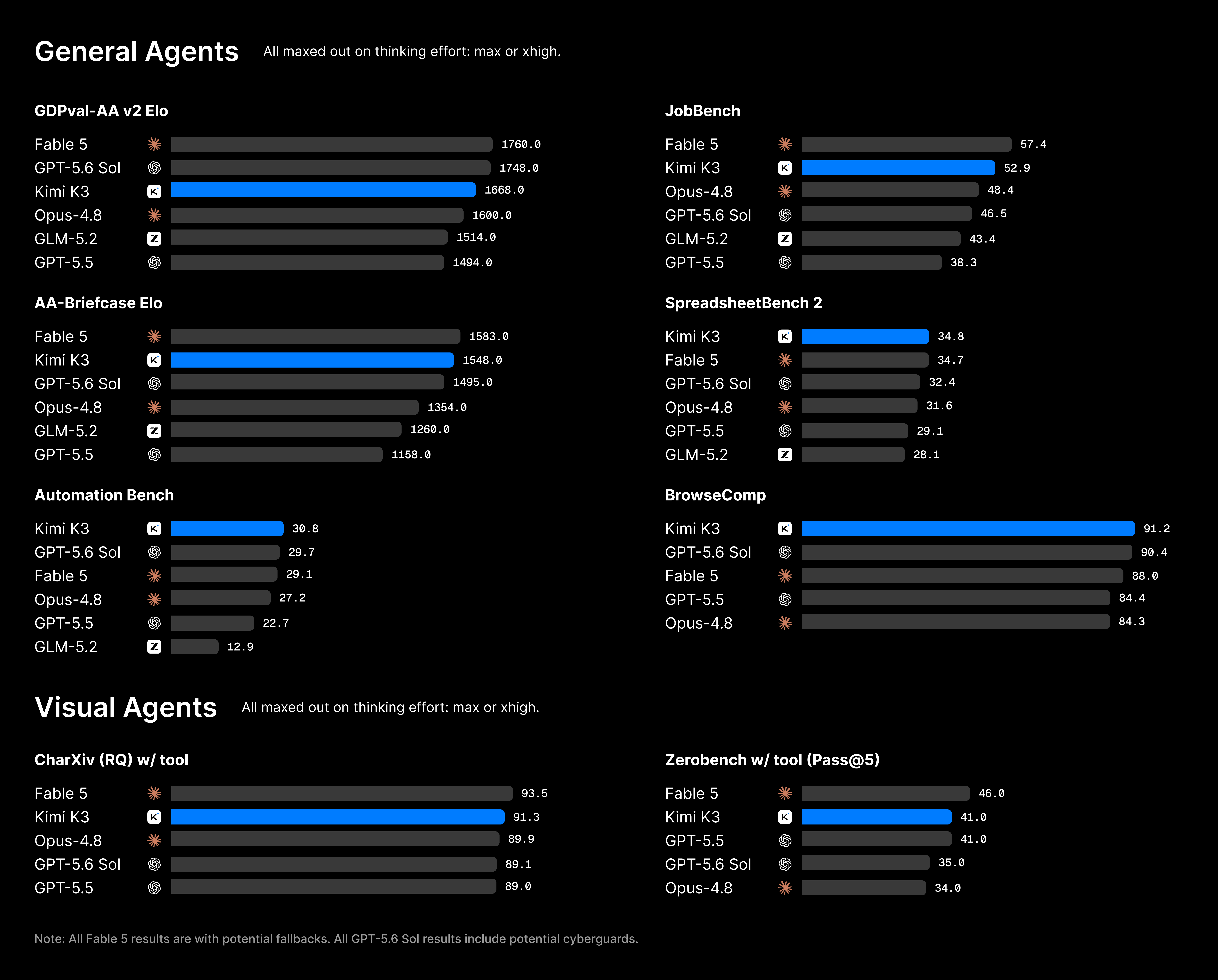 Moreover, Kimi K3 has achieved an impressive score of 91.2 on the BrowseComp benchmark, surpassing both Claude Fable 5 and GPT-5.6 Sol. This performance, combined with its economic advantages, points to a growing trend toward open-weight architectures in AI, which could reshape the landscape of technology and its applications across various sectors.
Kimi K3: Features and Performance
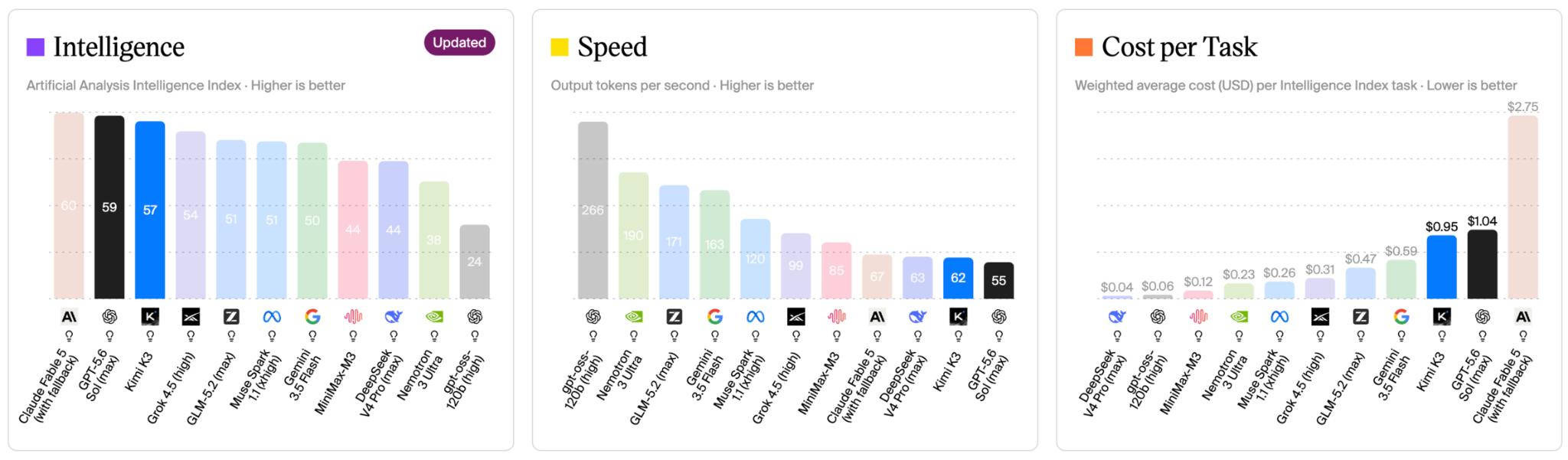 The Kimi K3 model, launched on July 20, 2026, at the World AI Conference in Shanghai, is designed to tackle complex tasks efficiently. It employs an innovative feature called 'Agent Swarm' that allows for the parallel execution of multiple tasks, thereby reducing inference latency and increasing overall productivity. This capability is particularly relevant for industries that require rapid processing of large data sets, such as finance, healthcare, and logistics.
In addition to its task execution prowess, Kimi K3’s multimodal integration allows it to seamlessly transition from visual inputs to code generation. This opens up new avenues for developers and businesses, enabling them to integrate advanced AI functionalities into their existing systems without significant overhauls. The model's design reflects a growing understanding that AI must adapt to local contexts and varying needs, making it more accessible and usable for a wider array of applications.
Economic Implications of AI Advancements
The economic impact of artificial intelligence is projected to be monumental, with estimates ranging from $17.1 trillion to $25.6 trillion annually. This staggering figure underscores the importance of making AI tools like Kimi K3 available to a broad audience. By reducing the costs associated with AI deployment, open-weight models such as Kimi K3 are poised to democratize access to advanced technologies.
As more U.S. companies begin adopting Kimi models, the AI landscape is shifting. Notably, Chinese AI models now comprise 60% of U.S. token usage on platforms like OpenRouter, highlighting the growing influence of models developed outside traditional Western tech hubs. The trend towards open-weight systems could lead to increased collaboration and innovation across borders, potentially accelerating the pace of technological advancements.
The Future of AI: Open vs. Closed Systems
 The release of Kimi K3 exemplifies a critical shift in the AI industry, as the convergence toward open-weight architectures becomes increasingly evident. Unlike closed models, which often create structural frictions that hinder adoption and customization, open-weight models like Kimi K3 facilitate broader integration and application across diverse sectors. This structural flexibility is vital for businesses looking to leverage AI in their operations.
The implications of this shift are profound. Companies that adopt open-weight models will likely enjoy enhanced adaptability and cost-effectiveness, allowing them to respond more swiftly to changing market demands. As the technology matures, it could lead to a new standard in AI development that prioritizes accessibility and efficiency over proprietary restrictions.
What This Means for AI Development and Adoption
The emergence of Kimi K3 signals a transformative moment in the AI industry, emphasizing the importance of open-weight models for fostering innovation and increasing accessibility. As organizations look to harness the economic potential of AI, the ability to deploy cost-effective and adaptable solutions will be paramount. By reducing barriers to entry and enabling more extensive customization, open-weight architectures like Kimi K3 could redefine how AI is integrated into everyday business practices. As this trend continues to evolve, the implications for global economic growth and technological advancement are substantial. For more insights on this topic, visit Forbes at www.forbes.com.
Article sources
Image credits
- Image via nerdheadz.com